
Olgun Çiçek
University of Ljubljana, Slovenia
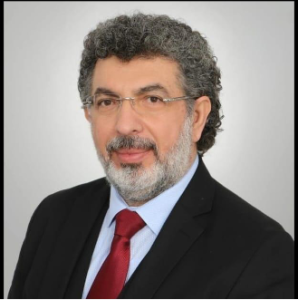
Küresel Yükseköğretim ve Kalite Güvencesi Ekosisteminde SKA’ların Rolü
Bio
Professor Olgun Cicek is currently affiliated with the University of Ljubljana as a Senior Researcher in a Horizon Europe project. He is an international expert in quality assurance and accreditation, microcredentials, and internationalisation strategies for higher education institutions. Over the past three decades, Professor Cicek has held senior leadership, advisory, external examiner, and keynote speaker roles in higher education institutions, quality assurance agencies, ministries, and international organisations. His experience includes collaboration with INQAAHE in Spain, CHEA-CIQG in the United States, the TNE Institute in the United Kingdom, as well as various ministries and national and regional higher education networks across Europe and beyond, covering three continents.
Abstract
In today’s interconnected global environment, higher education is expected not only to transmit knowledge, but also to build understanding across cultures, promote global citizenship, advance sustainability, and prepare learners for a rapidly transforming future. In this context, the role of SDGs in the global higher education and quality assurance ecosystem has become increasingly significant, as they provide a shared framework for aligning institutional missions, educational outcomes, research priorities, social responsibility, and international engagement with broader societal needs.
Quality Assurance in Higher Education therefore has a more strategic role than ever before. It is no longer limited to compliance and accountability; rather, it must serve as a dynamic instrument for trust-building, innovation, relevance, inclusion, sustainability, and continuous improvement. By integrating the Sustainable Development Goals into quality assurance frameworks, institutions and quality assurance agencies can promote a more holistic understanding of quality—one that connects academic standards with ethical responsibility, equity, employability, lifelong learning, environmental awareness, and measurable societal impact.
At the same time, as artificial intelligence reshapes teaching, learning, assessment, research, and institutional management, quality assurance systems must evolve to ensure that innovation is accompanied by integrity, transparency, fairness, inclusion, and academic standards. A future-oriented quality assurance approach should help institutions address key questions: How do we ensure that AI enhances learning rather than weakens critical thinking?
How do we maintain fairness, ethics, and reliability in assessment? How do we preserve the human, cultural, social, and sustainability dimensions of education in an increasingly digital world?
At the global level, quality assurance can act as a bridge—connecting systems, supporting recognition, fostering mobility, promoting sustainable development, and strengthening confidence among institutions, students, employers, policymakers, and societies. In an AI-driven and sustainability-focused world, our shared responsibility is to ensure that higher education remains human-centered, internationally connected, socially responsible, and quality-driven.
Maurizio Tira, EUA Board Member
University of Brescia, Italy

2030 Sonrası Sürdürülebilirlik İçin Üniversiteler: Uzun Vadeli Dönüşüm Sürecini Yönetmek
Bio
Maurizio Tira is Full Professor of Urban and regional Planning at the University of Brescia, where he served as Rector from 2016 to 2022. He is member of the Board of EUA, delegated to sustainability, to the Executive Committee of the Magna Charta Observatory and the EUA-CDE-Steering Committee. Past-President of the Italian Society of Urban Planners, he is member of the Board of the Academy of Science, Letters and Arts in Brescia and Corresponding Member of the Academy of Science of Bologna and the Academy of Science of Region Lombardy. He is member of the Transport Research Committee of the International Transport Forum (at OECD) as representative of the Italian Government, President of Consortium GARR “The ultra-broadband network dedicated to the Italian research and education community” and member of the board of the “National Centre for HPC, Big Data and Quantum Computing”, as representative of the Italian Minister of University and Research. In December 2020 he has been appointed Commander of the Order of Merit of the Italian Republic.
Abstract
Many of the defining challenges of our time, climate change, biodiversity loss, demographic change, technological disruption and social fragmentation, unfold across generations rather than political cycles. They require institutions capable of combining long-term thinking with action in the present. Universities are among the few institutions that naturally operate across generations. They educate future citizens and professionals, preserve and create knowledge, and provide spaces for critical reflection and dialogue. This unique position gives universities a particular capacity and opportunity to address long-term societal challenges. The ways in which universities contribute to sustainable development are likely to influence how they evolve as institutions, just as changes within universities may shape their capacity to contribute to sustainable societies. The speech will briefly present the result of the EUA’s survey on “Sustainability and greening in European higher education” and some consideration on how universities can contribute to sustainability beyond 2030 and how they can strengthen their capacity to help societies navigate long-term transformation.
Aras Bozkurt
Anadolu University, Türkiye

Fifty Shades of AI
Bio
Aras Bozkurt is a researcher and faculty member at Anadolu University, Türkiye. With MA and PhD degrees in distance education, Dr. Bozkurt’s work focuses on empirical studies in areas such as distance education, online learning, networked learning, and educational technology. He applies critical theories like connectivism, rhizomatic learning, and heutagogy to his research. Dr. Bozkurt is also interested in emerging research paradigms, including social network analysis, sentiment analysis, and data mining. Dr. Bozkurt’s studies also cover the integration of artificial intelligence technologies into educational processes in the axis of human-machine interaction.
Abstract
Artificial intelligence has stopped being a peripheral tool in higher education and become a structural force reshaping who learns, who teaches, and who is even present in the room. This keynote, Fifty Shades of AI, rejects the binary of pro-AI versus anti-AI and instead examines the spectrum of tensions educators now navigate. It traces the gap between formal AI policy and informal AI use, the emergence of the “ghost student” enabled by agentic AI browsers, and the blurred line between organic and synthetic content in research and writing. It confronts cognitive debt, where short-term gains from AI assistance produce long-term losses in independent thinking, alongside the cultural and institutional fault lines that shape who adopts AI and who resists it. Drawing on recent scholarship on AI literacy, agentic AI governance, and human-AI interaction, the talk argues that resilience, not acceptance or rejection, is the only viable institutional posture. It closes with four unresolved questions about credentialing, agency, architecture, and intellectual debt, leaving the audience not with solutions but with the obligation to choose deliberately. The shade we choose reveals more about us than about the technology itself.