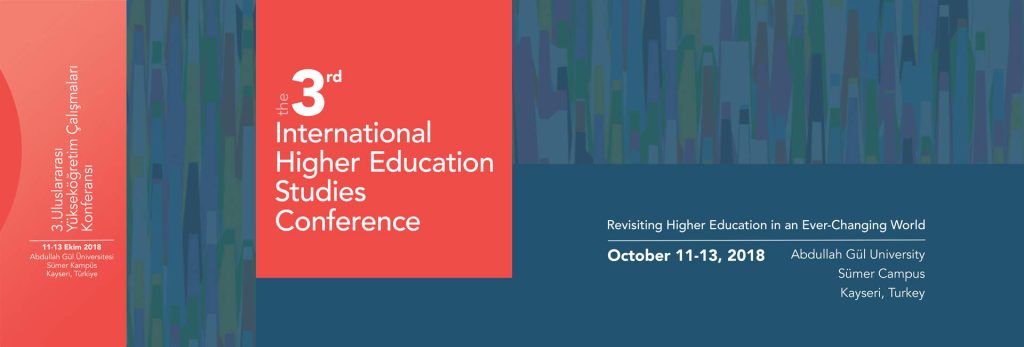
The main aims of the 3rd International Higher Education Studies Conference (IHEC 2018) are creating a platform for joint studies in the field of higher education and sharing and discussing new trends, research results and theoretical perspectives therein.
The IHEC focuses on macro policies, models, reform acts and method proposals against the backdrop of changing demands, opportunities, expectations and problems of higher education in the world and in Turkey.
The theme of this year’s conference is “Revisiting Higher Education in an Ever-Changing World”.
Conference Topics
New Model Suggestions and Approaches for Higher Education in the Changing World
Transdisciplinary Ecosystem in Higher Education
Relationship Between Quantity and Quality in Higher Education
Internationalization and Local Approaches in Higher Education
Institutional Culture, Organizational Climate and Leadership in Higher Education
Teaching and Learning in Higher Education
Higher Education, Collaborations and Societal Impact
Interaction Strategies and Models between University and Industry
Towards an Integrated Digital Organization in Higher Education
Reframing Higher Education Outcomes from the Viewpoint of Alumni Profiles
Effective Resource Management and Usage at Higher Education within the Global Competitive Environment
Access and Equality in Higher Education
Ethics, Principles and Values in Higher Education
Higher Education, Community Development and Sustainability
Higher Education and University Rankings
Youth Studies in Higher Education
Theme
Revisiting Higher Education in an Ever-Changing World
The development of and changes in higher education are parallel to the transformation societies undergo. The Industrial Revolution and the dawn of the Information Age prompted a reconsideration of the aim, structure and responsibilities of higher education. In order to keep up with the growing competition and globalization in our world, individuals are expected to be innovative, entrepreneurial and have multifaceted knowledge, attitude, and skills. Combined with digitalization, the growing competition and globalization result in considerable transformations in the social, economic and cultural spheres. As a natural consequence of this process, professional life is affected, competences expected from individuals vary, and new occupations emerge. This state of affairs, together with globalization, change the nature of the demand for higher education. Since it is inevitable that universities direct and manage the aforementioned processes, it is necessary to rethink the basic responsibilities of higher education in terms of education, research, and societal impact.
The aforementioned raises some basic questions on the agenda of higher education studies such as revision of education environments, university-society-industry collaborations, work conditions of academics, sense of management and leadership at higher education institutions, sense of higher education quality among others. The stakeholders of higher education are inclined to choose institutions which update themselves, have a transformational societal impact, are effective and productive, and adopt and apply an educational understanding which can satisfy expectations. Moreover, higher education institutions need to move beyond their traditional roles and carry out inter-disciplinary and transdisciplinary research and propose solutions for the qualitative needs of the society.
Countries are now seeking change in their higher education systems in line with their own structural, economic and cultural characteristics and the universal necessities brought about by globalization. At the center of this search towards answering the needs of the society and industry lies high quality education and research. What is more, high quality education and research must be blended and transformed into societal impact.
These discussions, have been directly or indirectly affecting many aspects of higher education from the university mission, organizational structure, and internationalization strategies to local needs, teaching methods, research approaches, university success criteria, and financing. In this context, the main theme of the International Higher Education Studies Conference is “Revisiting Higher Education in an Ever-Changing World”.
Around the main theme, the following four problem areas will be discussed extensively in order to scrutinize new approaches and produce solutions for existing issues:
- What is the nature of the change in expectations from higher education?
- How can we redefine the duties and responsibilities of higher education in the three main pillars of education, research and societal impact?
- What needs to be done to realize change in the higher education systems of different countries?
- What are the best practices that improve the quality of the higher education and integrate new approaches into it?
Adapting higher education into a globalizing and digitalizing world necessitates the discussion of many issues. In this regard, the conference aims to discuss all the topics which must to be considered on the basis of the local and international needs and expectations of higher education.
Significance of the Conference
In the time of increasing competition, higher education institutions face challenges of equipping students with qualifications expected by the worlds of business and industry. Thus, there is the utmost importance to manage the three cornerstones of higher education – education, research and societal impact – in a manner satisfying expectations, while making them sustainable and reorganize these services.
In this context, the focus points of IHEC 2018 are to understand where higher education institutions stand with regard to the needs of individuals, society and the business world. At the same time these institutions need to revise processes, procedures, and structures to develop innovative and feasible solutions to overcome emerging problems. Therefore, IHEC 2018 aims to discuss not only current approaches, but also emerging practices and processes. The conference is expected to be a platform for discussing the effect of new currents of thought such as the new industrial revolution, industry 4.0-5.0, and society 5.0, which will help manage the growth in technological power.
In order to cover the subjects from differing angles, we expect the participation of higher education policy makers, high and middle level managers, officials from all higher education faculties, departments and programs, NGOs, industry and business world representatives, researchers and academics of all disciplines in our conference. Models and suggestions proposed at the conference will be compiled to be shared with relevant policy makers and a selection from the conference papers will be published in two edited books, one in Turkish and one in English.
Committees
Advisory Committee
Prof. Dr. İhsan Sabuncuoğlu, Rector, Abdullah Gül University
Prof. Dr. Reitumetse Obakeng Mabokela, Illinois University at Urbana-Champaign
Prof. Dr. Jamil Salmi, Emeritus, Diego Portales University
Prof. Dr. Ziya Selçuk, Gazi University (Retired)
Prof. Dr. William G. Tierney, Southern California University
Organizing Committee
Assoc. Prof. Dr. Sedat Gümüş, Necmettin Erbakan University
Assoc. Prof. Dr. Türker Kurt, Gazi University
Assoc. Prof. Dr. Fatma Nevra Seggie, Boğaziçi University
Assist. Prof. Dr. Özgür Balkılıç, Abdullah Gül University
Assist. Prof. Dr. Elif Bengü, Abdullah Gül University
Assist. Prof. Dr. Serap Emil, Orta Doğu Teknik University
Instructor Zeynep Tuğçe Çiftçibaşı Güç, Abdullah Gül University
Research Assist. Şebnem Soylu, Abddullah Gül University
Scientific Committee
Prof. Dr. Hasan Hüseyin Aksoy, Ankara University
Prof. Dr. Naciye Aksoy, Gazi University
Prof. Dr. Christine Cress, Portland State University
Prof. Dr. İbrahim Duyar, University of Arkansas at Little Rock
Prof. Dr. Yüksel Kavak, TED University
Prof. Dr. Zeynep Kızıltepe, Boğaziçi University
Prof. Dr. Jussi Kivistö, University of Tampere
Prof. Dr. Jenny J. Lee, University of Arizona
Prof. Dr. Kseanela Sotirofski, Aleksandër Moisiu University
Prof. Dr. Metin Toprak, Istanbul University
Prof. Dr. Bülent Yılmaz, Abdullah Gül University
Assoc. Prof. Dr. Osman Çekiç, Çanakkale Onsekiz Mart University
Assoc. Prof. Dr. Zafer Çelik, Yıldırım Beyazıt University
Assoc. Prof. Dr. Armağan Erdoğan, Ankara Sosyal Bilimler University
Assoc. Prof. Dr. Enes Gök, Recep Tayyip Erdoğan University
Assoc. Prof. Dr. Bekir Gür, Yıldırım Beyazıt University
Assoc. Prof. Dr. Nicholas Hillman, University of Wisconsin-Madison
Assoc. Prof. Dr. Yaşar Kondakçı, Orta Doğu Teknik University
Assoc. Prof. Dr. Şefika Mertkan, Eastern Mediterranean University
Assoc. Prof. Dr. Riyad A. Shahjahan, Michigan State University
Assoc. Prof. Dr. Frédéric Yvon, Université de Geneve
Assoc. Prof. Dr. Wei-ni Wang, National Chung Cheng University
Asst. Prof. Dr. Rahman Çakır, Giresun University
Asst. Prof. Dr. Ömer Çalışkan, Bozok University
Asst. Prof. Dr. Burcu Erdemir, Çankaya University
Asst. Prof. Dr. Murat Esen, İzmir Katip Çelebi University
Asst. Prof. Dr. Seung-Hwan Ham, Hanyang University
Asst. Prof. Dr. Burcu Arığ Tibet, Ufuk University
Asst. Prof. Dr. Ayhan Ural, Gazi University
Asst. Prof. Dr. Barış Uslu, Çanakkale Onsekiz Mart University
Asst. Prof. Dr. Yisu Zhou, Macau University
Dr. Burak Arıkan, Kadir Has University
Dr. Alper Çalıkoğlu, Association for Higher Education Studies
Dr. Miguel Antonio Lim, University of Manchester
Dr. M. Mahruf C. Shohel, Aberystwyth University
Dr. Betül Bulut Şahin, Middle East Technical University
Guest Speakers
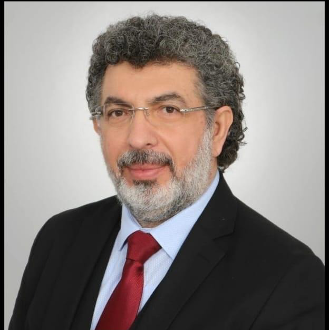
Prof. Dzulkifli Abdul Razak
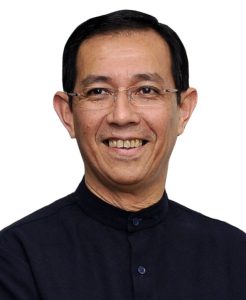
DZULKIFLI ABDUL RAZAK (Professor) is the Immediate Past President of International Association of Universities (IAU), based at UNESCO, Paris, after serving as the 14th President (2012-2016).
Currently, he is the Chairperson, Board of Directors, Islamic Science University Malaysia (USIM) after being the 1st holder of Islamic Leadership Chair and the Principal Fellow in USIM from 2014-2016. He is also an Honorary Professor at University of Nottingham _since 2014. He is also a member of the Advisory Board, Higher Education Leadership Academy (AKEPT), Malaysia. Dzul was awarded the prestigious 2017 Gilbert Medal for long-term commitment toward internationalisation, and education for sustainable development as a public good. He is distinctively recognised for his willingness to challenge the current knowledge system and offer alternative views on education, science and philosophy. The awarded is sponsored by Universitas 21 – a consortium of renowned universities from 16 countries. He was received the 2017 Asia HRD Contribution to Society Award as a recognition for people development in the academic world. He had served as the 5th Vice-Chancellor/President of University of Science Malaysia from 2000-2011; and the _World Health Organisation (WHO) Expert Advisory Panel on Drug Policy and Management (1995-2010); and _WHO Scientific Committee of Tobacco Product Regulation (2004-2006). Currently he is the Regional Coordinator of Asia-Pacific Region in the _International Research Project “Reorienting Education and Training Systems to Improve the Lives of Indigenous Youth” led by the UNESCO Chair at York University, Toronto, Canada.
Dzul is Fellow, Academy of Sciences Malaysia (FASc), the World Academy of Art and Science (FWAAS) and Malaysian Institute of Malaysia (FMIM). He is also Honorary Lifetime member of Asian Academy of Management. Recently, he was made Fellow. World Academy of Islamic Management. He received several Honorary Doctorates from various international universities, the latest from Istanbul Commerce University (İstanbul Ticaret Üniversitesi).
He writes a weekly column for more than 22 years (since 1995) for various Malaysia dailies, some available at www.thesundaily.my/news/columns/myview
Abstract
— DZULKIFLI ABDUL RAZAK,
— IMMEDIATE PAST PRESIDENT, INTERNATIONAL ASSOCIATION UNIVERSITIES, PARIS
Global inequality is rising almost everywhere according World Inequality Report. While it is difficult to compare accurately the status across the globe, it is generally accepted that the Global South is not doing as well as it counterpart in the North especially Europe for example.
According to the 2018 World Inequality Report, income inequality has increased in nearly all world regions in recent decades, but at different speeds. The fact that inequality levels are so different among countries, even when countries share similar levels of development, highlights the important roles that national policies and institutions play in shaping inequality. In this regard education can be the key factor involved to mitigate some of the related issues. The presentation will discuss some of this aspect in the view to create a just and sustainable future.
—
“…’guts’ is a commodity that is scarce nowadays in the country.”
– Mahathir Mohamad, 7th Prime Minister (10 May 2018)
Prof. Dr. Dr. h.c. Ulrich Teichler
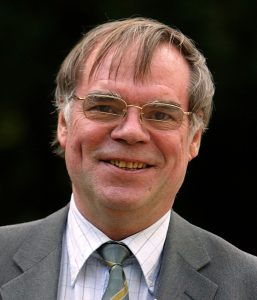
Professor at the International Centre for Higher Education Research (INCHER-Kassel) and the Department of Social Science, University of Kassel (Germany), from 1978 to 2013, and former director of the Centre for 16 years. Vice-president of the University of Kassel from 1980 to 1982. Born in 1942; diploma at the Free University of Berlin and doctoral dissertation (Dr. phil.) at the University of Bremen, both in sociology; 1968-1978 researcher at the Max Planck Institute for Educational Research, Berlin. Extended research periods in Japan, the Netherlands, and the U.S.; part-time or visiting professor for some period at Northwestern University (U.S.), College of Europe (Belgium), Hiroshima University (Japan), Open University (UK), Shanghai University (China) and Beijing Normal University (China); also teaching activities in Argentina, Austria, Norway and at other German universities. Research on higher education and the world of work, international comparison of higher education systems, the academic profession, and international mobility and internationalisation of higher education; for some period coordinator of various international research consortia. More than 1,300 publications and more than 1,000 visits to more than 80 countries for teaching, research collaboration, conferences, presentations, and consultancy. Member of the International Academy of Education (IAE) and the Academia Europaea (AE), former chairman of the Consortium of Higher Education Researchers (CHER), former president and distinguished member of EAIR, vice-president and fellow of SRHE, honourable member of the Gesellschaft für Hochschulforschung (GfHf); Comenius Prize of UNESCO; Dr. h. c. of the University of Turku (Finland). teichler@incher.uni-kassel.de
Abstract
All over the world, higher education is expected (1) to foster understanding of scientific theories, methods and areas of knowledge, (2) to care for cultural enhancement and personality development, (3) to lay the foundation for future professional work, and (4) to enable students to call into question conventional wisdom, to think critically and to strive for innovation. In recent years, the third function is discussed most controversially. Views differ whether the increased proportion of higher education-trained persons are needed in a knowledge society or have led to questionable “over-education”. Moreover, the confusing term “employability” has gained popularity – used differently as call for more specialization, or more direct preparation for competences expected by employers, or more general competencies, or more “key skills”, etc. Irrespective of these differences – higher education is called upon to reflect – more strongly than customary in the past – the professional relevance of study programmes, teaching and learning. Graduate surveys indicate an enormous variety of employment and work situations according to disciplines, individual higher education institutions and graduates’ sets of competences. This underscores the value of graduate surveys for individual institutions and individual fields of study as well as the opportunities of higher education institutions to pursue specific profiles rather than imitating the most prestigious universities or the traditional “main stream” of the relationships between higher education and the world of work.
Conference Programı
Organizing Institutions
Abdullah Gül University (AGU)
Abdullah Gül University (AGU), a State University supported by a philanthropic foundation (AGUV) and the first of its kind in Turkey, was established on 21 July 2010. The first students were accepted in the 2013-2014 academic year. The university project transformed one of the earliest and largest industrial complexes of the Republic of Turkey, Kayseri Sümerbank Textile Factory, into a campus of higher education. The construction of a second campus named after Mimar Sinan, the chief architect of the most glorious period of the Ottoman Empire, also born in Kayseri, continues as well.
The efforts towards the establishment of a second State University in Kayseri began in 2007 with an initiative of the city’s various institutional leaders. The university was named after the eleventh president of the Republic of Turkey, the Honorable Abdullah Gül, another Kayseri native, highlighting the strengths of the city in the field of education and the nationally accepted merits of its citizens in economic development and entrepreneurship. AGU would be developed to high standards, creating a difference in Turkish Higher Education.
Association for Higher Education Studies (AHES)
Association for Higher Education Studies (AHES) was founded in October 2015. AHES aims to fulfill a variety of roles within higher education field, so the aims of AHES include but not limited to conducting scholarly research at both national and international level, providing an alternative mechanism for sharing knowledge about similar interests, providing an alternative way for collecting and disseminating information, and sharing and discussing emerging practices, trends, research findings, and theoretical perspectives in academic settings such as conferences, congresses, panels, symposiums, seminars, and workshops. The board members and the other members in the association work in the field of higher education as academicians and/or administrators.