Participants may choose to publish the papers presented orally at the conference either in the YÖÇAD Full Text Proceedings Book (in Turkish or English) or in the Higher Education Governance & Policy (HEGP) published under YÖÇAD, subject to the peer review process.
Below are details regarding the publication processes:
(1) Full Text Proceedings Book process conducted by YÖÇAD:
The deadline for submitting full texts in Turkish or English for the Proceedings Book is November 1, 2025. Full texts prepared should be submitted in the specified format to yocad.ihec@gmail.com as a Word document. Submitted Full Text Papers by participating authors will be sent to print following the approval of the book editors, after the authors have completed the suggested revisions.
(2) Journal process conducted in collaboration with the Higher Education Governance & Policy (HEGP):
The Higher Education Governance & Policy (HEGP) will be published in English. Papers presented in Turkish at the conference can also be published in this journal if translated into English. The journal’s regular annual publication process will be operated. The deadline for submitting texts in English is November 1, 2025, and details of the publication process can be accessed via the following links:
The printing of the articles will depend on the decisions made at the end of the peer review process conducted by the journal editors after the author’s conference participation is confirmed.
The Young Researchers Session, which we initiated at the 6th International Higher Education Studies Conference (IHEC), will continue at IHEC 2025. The conference will feature special sessions designed for researchers who are early in their careers in the field of higher education. These sessions will be held on the same days as the main conference.
Organizing Committee
Tugay Durak, University College of London
Dr. Yusuf İkbal Oldaç, Hong Kong Eğitim Üniversitesi
Dr. M. Furkan Uzan, University of Southampton
Dr. Mete Kurtoğlu, Middle East Technical University
Who can attend the Young Researchers sessions?
These sessions are open to undergraduate, master’s, and doctoral students interested in higher education studies.
Why should I attend the Young Researchers session?
By participating, you will share your academic work with other early-career researchers and receive valuable feedback from experienced higher education researchers that can help advance your work. You will also have the opportunity to closely get to know other young researchers in the field, laying the groundwork for future academic collaborations. Lastly, you will have priority access to limited-capacity events specifically organized for young researchers, such as overseas experience sharing, academic writing workshops, etc.
Participants in these sessions will have the right to attend other sessions at the main conference and will receive the same certificate as other main conference attendees at the end.
How can I participate?
You can submit your paper for evaluation via the “paper submission” link on the homepage of the 8th International Higher Education Studies Conference. When uploading your paper, select the “Young Researchers Session” form. You must also upload a document proving your student status.
Can I attend without presenting?
Participants who provide proof of being a student and pay the reduced listener conference fee can attend the sessions as listeners.
Will any awards be given?
Yes! One individual (or one presentation group) among those who present at these sessions will receive the “Young Researchers Award.” The award will be based on the cumulative assessment of the presentation and the submitted application text.
“Not to be governed like this and in such a way”Defending Truth, Contesting Power, Imagining the Commoning University
Nowadays, global politics towards Higher Education and Universities shows massively alarming trends of threatened academics, delegitimized universities, withdrawn material basis for academic work. In times of authoritarian rule, which even turns into a tyrannic quality of power, “speaking truth to power” becomes more and more important. Inmidst these struggles against an economized, marginalized and subjected university, the question is, “can the subaltern speak”? Can academia defend truth and contest power? For many academics and universities, fear has started to rule their lives.
Can imagining a different tomorrow support to find strength against these massive threats? Can envisioning the commoning university support cocreational forces and support to shape university as a heterotopic space? Might relating to alternatives and speaking from the desired future open up liberating energies to the threatened minds? “Radical imagination” (Castoriadis, 1990) can support to overcome this “culture of fear” (Han 2023).
How can Marxist higher education research help us regain the future in the age of uncertainty?
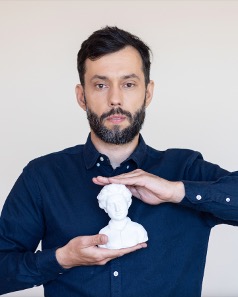
This keynote begins with a question: How can Marxist higher education research help us regain the future in the age of uncertainty? The very formulation presupposes, first, that we indeed inhabit such an “age.” Yet this uncertainty is unevenly distributed. In the global South and East, in countries like Turkey and Poland alike, it manifests not only as ecological collapse, wars distant and close, all-pervasiveness of precarious employment, or the destabilisation of university knowledge production under artificial intelligence, but also as intensified dependency on the global core, academic and economic alike. Our regions have long been experiencing uncertainty through volatile currencies, structural adjustments, the dictates of international organisations, and the persistent reproduction of peripheral positions within global academic capitalism.
Yükseköğretimde Kalite Güvencesi ve Akreditasyon: Bologna Süreci Bağlamındaki Eğilimler
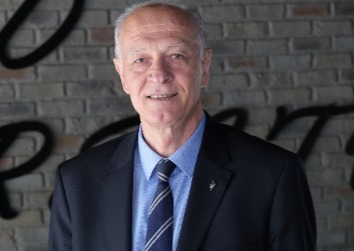
Dünyada yükseköğretimdeki büyüme eğilimlerine bakıldığında, yükseköğretimdeki büyüme ve yaygınlaşmanın farklı bölge ve ülkelere göre farklı hızda bir eğilim gösterdikleri görülmektedir. Her şeyden önce, ABD’nin daha 20. yüzyılın başlarında yükseköğretimde büyümeye başladığını, Batı Avrupa ülkelerinin de II. Dünya savaşının ardından büyüme hareketini başlattıklarını vurgulamak gerekir. Yükseköğretimde kitleselleşme ve evrenselleşme süreci özellikle 2000 yılı sonrasında diğer bölgelere de yayılmış, özellikle 2000-2020 yılları arasında öğrenci sayılarında 100 milyondan fazla kayıt gerçekleşmiş, toplam sayı 235 milyona ulaşmış, okullaşma oranları da %19’dan %40’a yükselmiştir. Bu bağlamda, aşırı öğrenci baskısı altında kalan, giderek genişleyen ve karmaşıklaşan yükseköğretim sistemleri, büyümeyle eşzamanlı olarak yükseköğretimde kaliteyi koruma, sürekli olarak geliştirme ve kaynaklarını daha etkin bir biçimde kullanma arayışları çerçevesinde, farklı biçimde kalite güvence sistemlerini uygulamaya geçirmiş, birbirleriyle işbirliği ve deneyim paylaşımı yoluyla küresel bir harekete dönüşmüştür. UNESCO verilerine göre 146 ülkenin %83’ünde yasal olarak kurulmuş en az bir ulusal kalite güvence kurumu bulunmaktadır. Kısaca, kalite güvencesi ve akreditasyon kurumları, bugün dünya yükseköğretim sistemlerinin ayrılmaz bir parçası olmuştur.
Kalite güvence sistemleriyle ilgili uygulamalar değerlendirildiğinde, kurumların iç kalite güvence sistemleri olgunlaştıkça, dış kalite güvence kurumlarının daha az müdahaleci olduğu ve öğretimi geliştirme konusunda danışmanlık rolü üstlendiği gözlenmektedir.
The Future of Higher Education in an Age of Uncertainty
Higher education, constituting an open and complex system, is shaped by its interactions with society, economy, culture, politics, nature, and other domains, whilst also playing an eminent role in shaping the future of the domains in question. From a historical perspective, major transformations such as the post-World War II era, which was marked by changes of profound sort in knowledge, science, education, and technology, along with the transition to a global knowledge economy/society beginning in the 1990s have also been periods during which higher education and universities were subjected to various forms of ‘restructuring’. The said periods have repeatedly prompted some fundamental questions like, ‘What is the university and what should it be?’, ‘What is and should be the role of higher education in constructing the future of our societies?’, and ‘What kind of a higher education reform is necessary to adapt to these transformations?’.
These questions also form the reason for the emergence of Higher Education Studies as an international and interdisciplinary field of research. Dwelling on and analyzing how these questions are mirrored in contemporary higher education policies necessitates collaborative, multi-disciplinary research initiatives, particularly in the fields of Educational Sciences, Social Sciences, and Humanities.
In recent decades, the accelerating pace of radical transformations alongside uncertainties pertaining to the future have compelled universities to develop ways through which they can sustain their existence within an ecosystem that calls for constant change. This externally driven and rapid demand for transformation has, in a fair number of respects, rendered traditional academic processes and the culture of universities and science increasingly unsustainable.
Within this frame of reference, at IHEC 2025, under the concept of ‘The Future of Higher Education in an Age of Uncertainty’, we intend to concentrate on the transformation of the missions of higher education viz. education, research, and community service in the face of multiple crises e.g., climate crisis, pandemics, economic crises, wars, migration, and others, on the challenges it encounters, and on the possible future scenarios. In this conference, which we expect it to be enriched with the contributions from scholars of diverse disciplines with distinct perspectives, we will broadly be addressing the following questions and themes: As the Association for Higher Education Studies, we are also pleased to be collaborating under this shared theme with TED University, founded in 2009 with the vision of ‘Leaving a lasting impact on social development for a sustainable future’.
How are the global policies on higher education evolving from the ‘Global Knowledge Economy’ toward the ‘Sustainable Development Goals’?
How will the trend towards massification in higher education be shaped by demographic changes? To illustrate, can massification continue in the countries in which birth rates are declining?
How are the pandemic and national protectionist tendencies impacting internationalization policies in higher education?
What pedagogical/andragogical approaches are coming to the fore in education and learning in the age of uncertainty?
How are learner profiles and experiences altering (with respect to intergenerational dynamics, poverty, identity, and alike)?
How do the current approaches to higher education administration and quality assurance models contribute to the effective functioning of universities under these conditions of uncertainty?
As the mental health and well-being needs of university stakeholders have become more crucial through the pandemic experience, how are these issues being addressed in higher education policies and practices?
How are digitization and Artificial Intelligence transforming the administration, education, research, and community engagement related missions of universities?
Conference Themes:
Academic freedom and autonomy of universities
Academic staff experiences and needs
Regional development and higher education
Science and technology policies
Digitization and Artificial Intelligence in education and research
Entrepreneurship, community engagement, development, sustainability
Graduate student experiences and needs
Micro-credentials and flexible learning
Faculty development policies
Higher education for the Sustainable Development Goals
Mental health and well-being of university stakeholders
University-city relations
University-industry/private sector collaboration and helix ecosystems
University students’ experiences and needs
New generation universities and alternative university models
Internationalization of higher education
Ethics, principles, and values in higher education
Quality assurance in higher education
Pedagogical/andragogical approaches in higher education
Access to higher education, equity, diversity, participation