IHEC2023 Yayın Süreci


Tam Metin Bildiri Kitabı, Eğitimde Kuram ve Uygulama Dergisi ve Higher Education Governance & Policy Dergisi Yayın Süreci

Bildirilerini yazılı hale dönüştürmek isteyen yazarlar, YÖÇAD Tam Metin Bildiri Kitabı veya Eğitimde Kuram ve Uygulama (EKU) ya da Higher Education Governance & Policy (HEGP) makale süreçlerinden sadece birini tercih edebileceklerdir. Aşağıda yayın süreçlerini bir kere daha hatırlatmak istiyoruz.

(1) YÖÇAD tarafından yürütülecek olan Tam Metin Bildiri Kitabı (The Proceedings Book) süreci:

Tam metin bildiri kitabı Türkçe veya İngilizce metinlerin gönderimi için son tarih 1 Kasım 2023 olup, tam metin olarak hazırlananan bildirilerin gönderimi konferans düzenleme kurulu tarafından belirlenen formatta ( Tam Metin Bildiri Formatı ) ve yocad.ihec@gmail.com adresine word dokümanı olarak gönderilmelidir.

Tam metin bildiriler (konferans katılımı konfirme edilerek), kitap editörleri tarafından düzenlemeleri ilgili yazarlarla birlikte yapıldıktan sonra editör kararıyla basılması söz konusu olacaktır.

Tam Metin Bildiri Formatı

Tam metin bildiri formatına bu linkten ulaşabilirsiniz. (PDF)

Tam metin bildiri formatını bu linkten indirebilirsiniz. (docx)

(2) Eğitimde Kuram ve Uygulama Dergisi (EKU) iş birliği ile yürütülecek olan dergi süreci:

Eğitimde Kuram ve Uygulama Dergisi özel sayısı Türkçe olarak yayınlanacaktır. Konferansta İngilizce sunulan bildiriler de Türkçe’ye çevrilmesi durumunda bu dergide yayınlanabilirler. Türkçe metinlerin gönderimi için son tarih 1 Kasım 2023 olup, yayın süreci detaylarına aşağıdaki linkler üzerinden ulaşabilirsiniz:

– Dergi websitesi: https://dergipark.org.tr/tr/pub/eku

– Dergi yazım kılavuzu: https://dergipark.org.tr/tr/pub/eku/writing-rules

– Dergi indeksler: https://dergipark.org.tr/tr/pub/eku/indexes

Gelen makalelerin basımı (konferans katılımı konfirme edilerek), özel sayı editörleri tarafından yürütülecek hakemlik süreci sonunda verilecek kararlara göre söz konusu olacaktır.

(3) Higher Education Governance & Policy Dergisi (HEGP) iş birliği ile yürütülecek olan dergi süreci:

Higher Education Governance & Policy Dergisi (HEGP) İngilizce olarak yayınlanacaktır. Konferansta Türkçe sunulan bildiriler de İngilizce’ye çevrilmesi durumunda bu dergide yayınlanabilirler. Derginin yıllık normal yayın süreci işletilecektir. İngilizce metinlerin gönderimi için son tarih 1 Kasım 2023 olup, yayın süreci detaylarına aşağıdaki linkler üzerinden ulaşabilirsiniz:

– Dergi websitesi: https://dergipark.org.tr/en/pub/hegp

– Dergi yazım kılavuzu: https://dergipark.org.tr/en/pub/hegp/writing-rules

– Dergi indeksler: https://dergipark.org.tr/en/pub/hegp/indexes

Gelen makalelerin basımı (konferans katılımı konfirme edilerek), dergi editörleri tarafından yürütülecek hakemlik süreci sonunda verilecek kararlara göre söz konusu olacaktır.


IHEC2023 Publication Process


Full Text Proceedings, Journal of Theory and Practice in Education and Journal of Higher Education Governance & Policy Publication Process

Researchers who would like to proceed with the publication process will have three options:  Full Text Proceedings, Journal of Theory and Practice in Education (EKU) or Higher Education Governance & Policy Journal (HEGP). Author(s) can only choose one of the options above; in other words, author(s) cannot publish the same paper in both proceedings book and in the journals. Please see the further details on these three options below:

(1) The Full Text Proceedings Book by YÖÇAD:

The deadline for the submission of the Turkish or English full texts is November 1, 2023. The full-text papers should be submitted as a word document to yocad.ihec@gmail.com in the format below determined by the conference organizing committee.

Full text papers (after the confirmation of the conference attendance) will be published following the decision of the editors after the necessary editing and changes are made by the book editors together with the authors.

Full Paper Book Format

You can reach the full paper book format in this link. (PDF)

You can download the full paper book format from this link. (docx)

(2) The Journal of Theory and Practice in Education (EKU):

A special issue of the Journal of Theory and Practice in Education will be published in Turkish. The papers presented at the conference in English can also be published in this journal if they are translated into Turkish. The deadline for the submission of Turkish texts is November 1, 2023. You can access the details of the publication process via the links below:

– Journal website: https://dergipark.org.tr/tr/pub/eku

– Journal writing guide: https://dergipark.org.tr/tr/pub/eku/writing-rules

– Journal indexes: https://dergipark.org.tr/tr/pub/eku/indexes

The submitted articles (with the confirmation of the conference participation) will be published depending on the decisions of the refereeing process to be carried out by the special issue editors.

(3) The Journal of Higher Education Governance & Policy (HEGP):

The Journal of Higher Education Governance & Policy (HEGP) will be published in English. The papers presented in Turkish at the conference can also be published in this journal if they are translated into English. The annual regular issue of the journal will be published. The deadline for the submission of English texts is November 1, 2023. You can access the details of the publication process via the links below:

– Journal website: https://dergipark.org.tr/en/pub/hegp

– Journal writing guide: https://dergipark.org.tr/en/pub/hegp/writing-rules

– Journal indexes: https://dergipark.org.tr/en/pub/hegp/indexes

The submitted articles (with the confirmation of the conference participation) will be published depending on the decisions of the refereeing process to be carried out by the journal editors.


1. Uluslararası Yükseköğretim Çalışmaları Konferansı (IHEC 2015)


Boğaziçi Üniversitesi ve Türk Eğitim Derneği (TED) tarafından hazırlanan “Değişen dünya ve yükseköğretim: Kimlik, politika ve reform modelleri“ temalı konferans 14-16 Ekim 2015 tarihleri arasında Boğaziçi Üniversitesi’nde düzenlenmiştir.

Temel amacı ortak çalışmalar için zemin yaratabilmek ve günümüz yükseköğretim dünyasında beliren yeni eğilimleri, araştırma sonuçlarını ve kavramsal bakış açılarını paylaşmak ve tartışmak olan bu konferans, yükseköğretimin dünyada ve Türkiye’de yönelimi, rolü, organizasyonu ile birlikte her geçen gün değişen talepler, fırsatlar, beklentiler ve sorunlar bağlamında makro politikalar, modeller, reform hareketleri ve yöntem önerilerine odaklanmıştır.

İngilizce ve Türkçe olarak yapılan sunumlar arasından seçilmiş olan makaleler Eğitim ve Bilim (SSCI) (Özel Sayı) (İngilizce) ve Yükseköğretim ve Bilim (Türkçe)dergilerinde yayınlanmıştır. Eğitim ve Bilim Dergisinin Nisan 2016 “Developing a Research Agenda on Higher Education: Implications for Method, Theory and Policy” başlıklı özel sayısına http://egitimvebilim.ted.org.tr/index.php/EB/issue/view/202 adresinden ulaşabilirsiniz.

Düzenleme Kurulu Eş Başkanlığını Prof. Dr. Ziya Selçuk ve Doç. Dr. Fatma Nevra Seggie’nin yaptığı konferansın açılış konuşmalarını sırasıyla Boğaziçi Üniversitesi Rektörü Prof. Dr. Gülay Barbarasoğlu ve TED Genel Başkanı Selçuk Pehlivanoğlu yapmışlardır. Konferansa davetli konuşmacılar olarak YÖK Üyesi Prof. Dr. Durmuş Günay “A Philosophical look to the university and Turkish universities” ve Amerika Birleşik Devletleri, Southern California Üniversitesi’nden Prof. Dr. William G. Tierney “Barriers to innovation and creativity in higher education” başlıklı sunuları ile katılmışlardır. Davetli konuşmacıların yanı sıra 2 Türkçe panel yapılmış ve bu panellerde ‘Türkiye yükseköğretiminde kalite güvencesi’ ve ‘Türkiye’de üçüncü nesil üniversiteler’ konuları irdelenmiştir.

Konferans yükseköğretimin idari ve bilimsel boyutları ile ilgilenen (YÖK üyeleri, üniversite rektörleri,akademisyenler, MEB çalışanları, çeşitli STK’lar, yükseklisans ve doktora öğrencileri gibi) yaklaşık 150 kişinin katılımı ile gerçekleşmiştir. Azerbeycan, Çin, ABD, Finlandiya, Kıbrıs, Katar, Malezya, Pakistan, Bosna-Hersek ve Gürcistan gibi farklı ülkelerden akademisyenlerin de bildirileriyle katıldığı uluslararası bu konferansta toplam 24 Türkçe, 55 İngilizce bildiri sunulmuştur.

22 alt teması olan ve 20 farklı oturumda gerçekleşen konferansın ana teması ile ilgili detaylandırmayı, komitelerini , konuşmacılarını ve bildiri özetlerini TEDMEM tarafından hazırlanan IHEC 2015 1. Uluslararası Yükseköğretim Çalışmaları Konferansı Bildiri Özetleri kitapçığında bulabilirsiniz. IHEC 2015 İngilizce ve Türkçe olarak hazırlanan web sayfasında bütün duyurular yapılmış olup, başvuru, kabul ve kayıt süreçleri buradan yürütülmüştür.

IHEC 2015 1. Uluslararası Yükseköğretim Çalışmaları Konferansı basında da geniş yer bulmuştur. Konferans ile ilgili çıkan yazılardan bazılarına aşağıdaki web sitelerinden ulaşılabilir:

hurriyet.com.tr – “Araştırma için akademik özerklik şart”

sozcu.com.tr – “Değişen dünya ve yükseköğretim Boğaziçi’nde konuşulacak!”

turkiyegazetesi.com.tr – “Değişen Dünya ve Yükseköğretim”

egitimtercihi.com – “Değişen dünyada yükseköğretim nasıl olmalı?”

Guest Speakers

Zehra Taşkın

Zehra Taşkın is an Associate Professor in the Department of Information Management at Hacettepe University, Turkey. Additionally, she is a researcher at Adam Mickiewicz University Scholarly Communication Research Group in Poland. Her research interests primarily focus on research/performance evaluations and scholarly communication. Taşkın’s M.A. thesis addressed the issue of standardizing university affiliations in citation indexes, and her doctoral dissertation designed a content-based citation analysis model for the Turkish Language. Her works have been published in esteemed journals in information science, including the Journal of Informetrics, JASIS&T, QSS and Scientometrics. Taşkın has participated in several national and international projects funded by organizations such as the Polish National Agency for Academic Exchange (NAWA Poland), NASA Astrobiology Institute, Tokyo Institute of Technology, Finnish Learned Societies, and TÜBİTAK (The Scientific and Technological Research Council of Turkey). She has also played an active role in the Libraries for Everyone project, funded by the Bill and Melinda Gates Foundation. She is the co-founder of the Scholarly Communication Network, which was established to support young researchers working in scholarly communication field. For more information, visit https://zehrataskin.com .


“Beyond the Numbers: Rethinking Research Performance Evaluations for Quality and Impact”

Researchers are often evaluated based on numerical metrics such as the number of publications and citations, the impact factor of the publication venue, the h-index of the researchers, and university rankings. However, the emphasis on numbers has resulted in a “publish or perish” culture and an uncontrollable number of scientific outputs that cannot be read by anyone. Additionally, relying solely on these metrics has created significant inequalities between researchers, disciplines, countries, and research topics. To address these challenges, we need to shift away from systems that prioritize numbers and instead develop new systems that focus on evaluating the quality and impact of research output. Numerical metrics can be useful for evaluating research performance, however, they should not be the sole criteria for deciding academic success. Instead, we need to develop more comprehensive evaluation systems that prioritize the societal and scientific impact of research. In this presentation, I will explore whether numerical evaluations can be replaced and discuss alternative ways to measure research quality.


Tatiana Fumasoli

Tatiana Fumasoli is Professor of Higher Education Studies at UCL’s Faculty of Education and Society, University College London, where she is the director of the UCL Centre for Higher Education Studies (CHES). Her research interests lie at the intersection between management studies, organisation theory and sociology of professions and expertise. Tatiana has led several international projects focusing on global governance, strategic management, and the academic profession. Her research activities investigate new practices of internationalisation, crisis management, and networks of innovation in teaching and learning. She is currently leading a World Bank funded project on internationalization and research governance for the Ministry of Education and Science in Georgia. Tatiana is the editor-in-chief of Higher Education Quarterly, a journal of SRHE Society for Research into Higher Education.


Research careers in the “knowledge society”:  Role and contribution of higher education

The scholarship on doctoral education and researcher development reflects broader societal transformations, such as the emergence of the “knowledge society”, globalisation and internationalisation, marketisation. It also reflects the pressures that universities experience due to the increasing number of students and their heterogeneity. In parallel, universities’ role in knowledge production is being challenged by several stakeholders through demands for wider societal impact that goes beyond academia.

Against this backdrop, doctoral education and researcher development are being questioned on their purposes, organisation, pedagogical and learning experience, effective preparation of graduates for labour markets, partnerships with other societal sectors, and digital transformations. This presentation will highlight the unique role of universities in providing research training for the next generations of academics, as well as for highly skilled workers in contemporary economic sectors. It will also draw on recent research comparing different higher education systems and their competitiveness in enhancing national socio-economic development.


Davetli Konuşmacılar

Zehra Taşkın

Zehra Taşkın, Hacettepe Üniversitesi Bilgi ve Belge Yönetimi Bölümü’nde doçenttir. Ayrıca, Adam Mickiewicz Üniversitesi Bilimsel İletişim Araştırma Grubu’nda (Polonya) araştırmacı olarak görev yapmaktadır. Temel araştırma alanlarını araştırma/performans değerlendirmeleri ve bilimsel iletişim gibi konular oluşturmaktadır. Taşkın yüksek lisans tezinde, atıf dizinlerinde üniversite bağlantılarının standartlaştırılması konusunu ele almış olup, doktora tezinde ise Türk Dili için içerik tabanlı bir atıf analizi modeli tasarlamıştır. Çalışmaları Journal of Informetrics, JASIS&T, QSS ve Scientometrics dahil olmak üzere bilgi bilimindeki saygın dergilerde yayınlanmıştır. Taşkın, Polonya Ulusal Akademik Değişim Ajansı (NAWA Polonya), NASA Astrobiyoloji Enstitüsü, Tokyo Teknoloji Enstitüsü, Fince Öğrenen Topluluklar ve TÜBİTAK (Türkiye Bilimsel ve Teknolojik Araştırma Kurumu) gibi kuruluşlar tarafından finanse edilen birçok ulusal ve uluslararası projede yer almıştır. Taşkın, ayrıca Bill ve Melinda Gates Vakfı tarafından desteklenen Herkes için Kütüphane projesinde aktif rol almıştır. Bilimsel iletişim alanında çalışan genç araştırmacıları desteklemek amacıyla kurulan Bilimsel İletişim Ağı kurucu ortağıdır. Daha fazla bilgi için https://zehrataskin.com adresini ziyaret edebilirsiniz.


“Beyond the Numbers: Rethinking Research Performance Evaluations for Quality and Impact”

Researchers are often evaluated based on numerical metrics such as the number of publications and citations, the impact factor of the publication venue, the h-index of the researchers, and university rankings. However, the emphasis on numbers has resulted in a “publish or perish” culture and an uncontrollable number of scientific outputs that cannot be read by anyone. Additionally, relying solely on these metrics has created significant inequalities between researchers, disciplines, countries, and research topics. To address these challenges, we need to shift away from systems that prioritize numbers and instead develop new systems that focus on evaluating the quality and impact of research output. Numerical metrics can be useful for evaluating research performance, however, they should not be the sole criteria for deciding academic success. Instead, we need to develop more comprehensive evaluation systems that prioritize the societal and scientific impact of research. In this presentation, I will explore whether numerical evaluations can be replaced and discuss alternative ways to measure research quality.


Tatiana Fumasoli

Tatiana Fumasoli, UCL Yükseköğretim Çalışmaları Merkezi’nin (CHES) direktörü olduğu University College London, UCL Eğitim ve Toplum Fakültesi’nde yükseköğretim çalışmaları profesörüdür. Araştırma ilgi alanları, yönetim çalışmaları, organizasyon teorisi ve meslekler ve uzmanlık sosyolojisi arasındaki kesişme noktasındadır. Tatiana, küresel yönetişim, stratejik yönetim ve akademik mesleğe odaklanan birçok uluslararası projeye liderlik etmiştir. Araştırma faaliyetleri öğretme ve öğrenmede yeni uluslararasılaşma, kriz yönetimi ve yenilik ağları uygulamalarına odaklanmaktadır. Halen Gürcistan’daki Eğitim ve Bilim Bakanlığı için uluslararasılaşma ve araştırma yönetişimi üzerine Dünya Bankası tarafından finanse edilen bir projeye liderlik etmektedir. Tatiana, SRHE Society for Research into Higher Education’ın bir dergisi olan Higher Education Quarterly’nin baş editörüdür.


Research careers in the “knowledge society”:  Role and contribution of higher education

The scholarship on doctoral education and researcher development reflects broader societal transformations, such as the emergence of the “knowledge society”, globalisation and internationalisation, marketisation. It also reflects the pressures that universities experience due to the increasing number of students and their heterogeneity. In parallel, universities’ role in knowledge production is being challenged by several stakeholders through demands for wider societal impact that goes beyond academia.

Against this backdrop, doctoral education and researcher development are being questioned on their purposes, organisation, pedagogical and learning experience, effective preparation of graduates for labour markets, partnerships with other societal sectors, and digital transformations. This presentation will highlight the unique role of universities in providing research training for the next generations of academics, as well as for highly skilled workers in contemporary economic sectors. It will also draw on recent research comparing different higher education systems and their competitiveness in enhancing national socio-economic development.


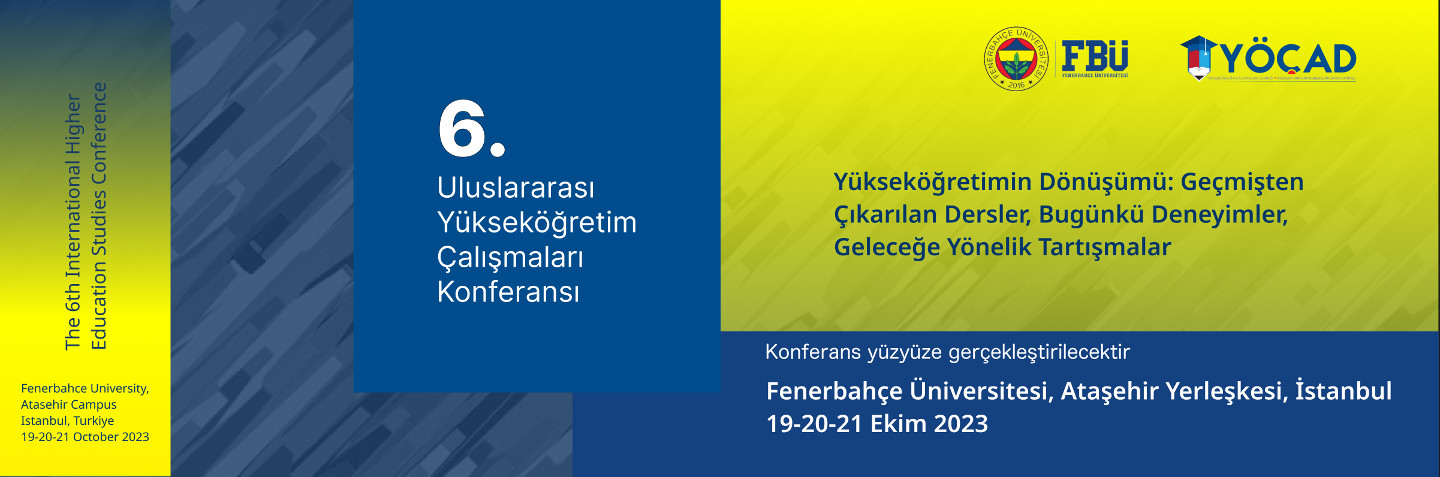
6. Uluslararası Yükseköğretim Çalışmaları Konferansı (IHEC 2023)


Bu konferans TÜBİTAK BİDEB 2223 Programları kapsamında desteklenmektedir.


Yükseköğretimin Dönüşümü: Geçmişten Çıkarılan Dersler, Bugünkü Deneyimler, Geleceğe Yönelik Tartışmalar

Günümüz dünyasında pandemi, ekonomik ve siyasi krizler, teknolojinin gelişimi, bölgesel ve küresel göç, iklim krizi, doğal afetler gibi birçok olayları gözlemlediğimiz bir zaman dilimine şahitlik etmekteyiz. Tüm bu olayların gölgesinde, kurumsal alanlar hızlı bir değişim ve dönüşüm süreci geçirmektedir. Bu alanlardan bir tanesi olan yükseköğretimde de dönüşüm kaçınılmaz hale gelmiştir. COVID-19 salgını, birçok ülkede üniversitelerin kapatılmasına ve uzaktan eğitime geçilmesine neden olmuştur. Bu geçişin sonucu olarak, yükseköğretim kurumları uzaktan yönetim ve uzaktan eğitim ile ilgili deneyimlerini arttırmış ve bunlar ile ilgili uygulamalar geliştirmiştir. Bununla birlikte bilgi teknolojilerindeki gelişmeler, özellikle yapay zekâ, bulut bilişim, büyük veri ve sanal gerçeklik gibi alanlarda, hızla ilerlemektedir. Bu gelişmeler, öğrencilerin öğrenme deneyimlerini zenginleştirirken, öğretim elemanlarına yeni öğrenme ve öğretme alanları ve yöntemleri sunmakta ve aynı zamanda yükseköğretimde araştırma ve yönetim şekillerini de etkilemektedir.

Bununla birlikte, dünyada yükseköğretime ayrılan kaynakların giderek azalması sonucunda bütçe ve kaynak yönetiminde değişimler de kaçınılmaz hale gelmektedir. Rekabet hızlı bir şekilde artmakta, öğrenci deneyimi ve memnuniyeti, üniversitelerin niteliği ve dünya sıralamaları tartışmalarda ön plana çıkmaktadır. Ayrıca, toplumlarda yaşanan sosyal ve kültürel değişimler, yükseköğretim kurumlarını da etkilemektedir. Bu etkileşim öğrencilerin demografik yapısını da değiştirmektedir. Bu çeşitlilik, yükseköğretim kurumlarının farklılaşan öğrenci ihtiyaçlarını karşılayıcı politikalar üretip disiplinler arası programlar, deneyimsel öğrenme fırsatları, kariyer gelişim yolları ve müfredat dışı etkinlikler sunma ihtiyacı doğurmaktadır. Çevresel değişimler de (iklim değişikliği, doğal afetler ve benzeri faktörler gibi) yükseköğretim kurumlarının işleyişini etkileyebilir. Bu tür etkiler, kurumun lojistik konumu, bina bakımı, enerji kullanımı, kaynak yönetimi gibi çok çeşitli konularda dönüşümlere neden olmaktadır. Bu da yükseköğretim yönetimi ve yükseköğretim politikaları alanlarında, sürdürülebilirlik açısından çevresel değişimlerin de en az diğer değişimler kadar merkeze alınması gerektiğini bize göstermektedir.

Elbette ki yükseköğretimdeki dönüşüm, yukarıda belirtilen alanlar ile sınırlı kalmamaktadır. Bu sürecin parçaları olan öğrenciler, akademik ve idari personel, yöneticiler ve ekosistemin diğer tüm paydaşlarının bir araya gelerek bu dönüşüm deneyimini masaya yatırması büyük önem taşımaktadır. Bu sebep ile bu dönüşümlerden öğrenilen dersleri, bugünkü deneyimleri, ortaya çıkan fırsatları, yeni mücadele alanlarını ve bunların doğrultusunda yükseköğretimin geleceğini tartışmak üzere sizleri 6. IHEC Konferansına davet ediyoruz


Konferans Konu Başlıkları:

  • Üniversitenin vizyon, misyon ve rolünü yeniden düşünmek
  • Yükseköğretimde etik, prensip ve değerler
  • Küresel sorunlara yükseköğretimin tepkileri ve cevapları
  • Yükseköğretim politikası, analizi ve uygulama örnekleri
  • Yükseköğretim ekosisteminde kültür ve iklim
  • Yükseköğretimde nicelik ve nitelik tartışması
  • Yükseköğretimde uluslararasılaşma ve yerelleşme
  • Dönüşüm sürecinde ortaya çıkan öğrenci ihtiyaçları
  • Öğretim elemanlarının ihtiyaçları ve beklentileri
  • Yükseköğretime erişim ve çeşitlilik
  • Yükseköğretimde güncel eğitim yaklaşımları
  • Yükseköğretim ve sürdürülebilirlik
  • Yetişkin eğitimi ve yaşam boyu öğrenme
  • Yükseköğretimde dijitalleşme
  • Yükseköğretim kurumlarındaki bireylerin iyi oluş (wellbeing) halleri
  • Yükseköğretimde dönüşüm sürecinde idare ve yönetim


IHEC2023 Özet Gönderimi

Katılım Şekilleri

Sözlü Sunum (15 dakika)

Sözlü sunumlar çoğunlukla bitmiş ya da bitirilmekte olan çalışmaları içerir. Araştırmacılar sunumlarını yaptıktan sonra katılımcılar ve oturum başkanının varsa açıklayıcı geri dönüşlerine ve sorularına yanıt verirler. Çalışmaların sunumunu yapacak araştırmacıların zaman tahsisine özen göstermesi gerekmektedir. Oturum başkanları, oturumun sunum sayısına göre zamanlamayı ayarlayabilir. Her sözlü sunum 15 dakika olarak planlanacaktır.

Sözlü Sunum Özeti: Kaynaklar hariç, 500-750 kelime arası olup aşağıdaki başlıkları içermelidir:

  1. Problem tanımını
  2. Çalışmanın amacını veya araştırma sorusunu/sorularını,
  3. Kavramsal/teorik çerçeveyi,
  4. Çalışmanın yöntemini (ampirik çalışmalar için),
  5. Bulguları (devam eden çalışmalarda ilk bulguları)/ Tartışmaları, ve
  6. Sonuçları içermelidir.

Sempozyum (60-90 dakika)

En az üç, en fazla beş bildiriden oluşan sempozyum önerileri yapılabilir. Sempozyum tartışmacısı, sempozyum ekibini ve teklifini sunmalıdır. Sempozyum önerisi 500 kelimeye kadar sempozyumu tanıtıcı tek bir metin ve her bir sempozyum bildirisi için 300 kelimelik özetlerden oluşmalıdır.

Sempozyum Özeti: Kaynaklar hariç, toplamda 500-700 kelime olup sempozyumun probleminin tanımını, amacını, kavramsal/teorik çerçevesini, sempozyum bildirilerinin sempozyuma katkısını, tartışmaları ve sonuçları içermelidir.

Sempozyum Bildiri Özetleri: Kaynaklar hariç, her bir özet 300-500 kelime arası olup aşağıdaki başlıkları içermelidir:

  1. Problem tanımını
  2. Çalışmanın amacını veya Araştırma sorusunu/sorularını,
  3. Kavramsal/teorik çerçeveyi,
  4. Çalışmanın Yöntemini (ampirik çalışmalar için),
  5. Bulguları (devam eden çalışmalarda ilk bulguları)/ Tartışmaları, ve
  6. Sonuçları içermelidir.

Yuvarlak Masa Toplantısı (sunum süresi: 10 dakika)

Yuvarlak masa oturumları, sunum yapanlar ve katılımcılar arasında yüksek etkileşime izin vermektedir. Bu oturumlar kariyerinin başındaki araştırmacılar ya da devam etmekte olan araştırmalar için uygundur. Tartışmalar, bir yuvarlak masa/toplantı formatında ortak ilgi alanları etrafında kümelenmiş küçük bir sunum grubuyla ilerleyecektir. Araştırma alanı hakkında bilgi sahibi bir moderatör etkileşim ve katılımı kolaylaştırmaya çalışacaktır.

Moderatör, başlangıçta tartışma konusunu ve oturum sunucularını kısaca tanıtacaktır. Ardından, tartışmada belirli sorulara ve zorluklara odaklanılacaktır. Temel kazanımlar, sonraki adımlara ilişkin fikirler ve somut eylemler gibi sonuçlar edinilmesi amaçlanmaktadır.

Yuvarlak Masa Oturumu için Özet: Oturum sunumcularının, ele alınan konuyla ilgili temel soruları ele alan bir özet veya yorum yazısı sunmaları gerekmektedir. Kaynakça hariç özet 350-400 kelime arasında olmalıdır. İlgili özet şu başlıkları ele almalıdır:

  1. Amaçlar ve/veya araştırma sorusu
  2. Perspektifler veya teorik çerçeve
  3. Yöntemler, teknikler veya araştırma yöntemleri
  4. Veri Kaynakları,
  5. Argümanlar için sonuçlar ve/veya doğrulanmış sonuçlar ve
  6. Oturumdan araştırmayla ilgili beklentiler ve/veya sorular

Poster Sunumu (10 dakika)

Poster oturumları, yapılan çalışmanın görsel unsurlar ve anlamlı özetler aracılığıyla kişiselleştirilmiş ve enformel tartışılmasına olanak sağlamaktadır. Poster sunumu yüksek lisans ve doktora öğrencileri için uygun olabilir. Tüm poster sunucuları oturumu kolaylaştıran bir e-Poster (pdf formatinda) sunmalıdır. Poster sunumcuları, yaptıkları çalışmayı temsil eden sanal ekranlar kurarlar. Poster oturumu, katılımcılara posterleri çevrimiçi görüntüleme, yazarın sunumlarını dinleme ve bildirilere erişme şansı vermektedir. Genel bir oturumun aksine, bir poster oturumu katılımcıların bilgileri inceleme ve gözden geçirmelerine ve uygulayıcılarla bire bir tartışmalarına olanak tanımaktadır.

Poster Tanıtımı: Kaynaklar hariç, 350-500 kelime arası olup aşağıdaki başlıkları içermelidir:

  1. Problem tanımını
  2. Çalışmanın amacını veya Araştırma sorusunu/sorularını,
  3. Kavramsal/teorik çerçeveyi,
  4. Çalışmanın Yöntemini (ampirik çalışmalar için),
  5. Bulguları (devam eden çalışmalarda ilk bulguları)/ Tartışmaları, ve
  6. Sonuçları içermelidir.

Yazara bilgi

Konferans dili Türkçe ve İngilizcedir. Özetini İngilizce gönderenlerin sunumlarını İngilizce yapmaları gerekmektedir.

IHEC 2023 hakemli bilimsel bir konferanstır. Konferansa gönderilen tüm bildiriler/sempozyumlar alanında uzman en az 2 hakem tarafından ”kör hakemlik’’ uygulaması çerçevesinde değerlendirilecektir. Kabul veya red kararı hakem değerlendirmesi sonucuna göre verilmektedir.


Önemli Hatırlatmalar

Ortak yazarlı çalışmalar için konferansa bizzat katılacak her bir katılımcının katılım ücreti yatırması gerekmektedir. Bir katılımcı en fazla 2 bildiri sunabilir.

Bir yazarın ismi en fazla 3 bildiride yer alabilir.

Konferans programına dahil olmak isteyenlerin 18 Eylül 2023 tarihine kadar konferansa kayıt olması gerekmektedir.


IHEC2023 Call for Abstracts

Participation Types

Oral Presentation (15 minutes)

A typical structure for an oral presentation includes completed or close to completion research studies. After an author’s presentation, critique, and discussion by the session chair and participants. For the presentation of their work, individuals must be attentive to the time allocation. Session chairs may adjust the timing based on the number of presentations for the session. Each oral presentation will be scheduled for 15 minutes.

Abstract for Oral Presentation: Excluding references, the abstract should be between 500-750 words and include the following sub-titles:

  1. Description of the problem,
  2. Aim of the study or Research question(s),
  3. Conceptual/Theoretical Framework,
  4. Research Method (for empirical work),
  5. Findings (preliminary findings for work in progress)/Discussion points, and
  6. Conclusion.

Symposium (60-90 minutes)

Each symposium proposal must include minimum 3 maximum 5 presentations. The Symposium Discussant must introduce symposium presenters and submit the proposal (symposium summary and symposium presentation abstracts).

Symposium Summary: Excluding references, the summary should be between 500-700 words and include the description of the symposium, its purpose, conceptual/theoretical framework, the contribution of symposium presentations to the symposium, discussion points and conclusion.

Symposium Presentation Abstracts: Each abstract, excluding references, should be between 300-500 words and include the following sub-titles:

  1. Description of the problem,
  2. Aim of the study or Research question(s),
  3. Conceptual/Theoretical Framework,
  4. Research Method (for empirical work),
  5. Findings (preliminary findings for work in progress)/Discussion points, and
  6. Conclusion.

Roundtable (time for presentation: 10 minutes)

Roundtable sessions allow high interaction among presenters and with attendees. It would be more appropriate for junior researchers and work-in-progress research studies. The discussions will take place in a small group of session presenters clustered around shared interests in a roundtable/boardroom setting. A moderator who is knowledgeable about the research area facilitates interaction and participation. The moderator introduces the discussion topic and session presenters briefly. Then, the discussion focuses on specific questions and challenges. The conclusions such as key-learnings, ideas on the next steps and concrete actions are drawn.

Abstract for Roundtable Session: Session presenters are required to submit a paper or commentary paper addressing central questions regarding the issue under consideration. Excluding references, the abstract should be between 350-400 words. Commentary papers need to address the elements required for paper submissions:

  1. Purposes;
  2. Perspectives(s) or theoretical framework;
  3. Methods, techniques or modes of inquiry;
  4. Data Sources,
  5. Results and/or substantiated conclusions for arguments, and
  6. Expectations from the session regarding the research and/or questions

Poster Presentation (10 minutes)

Poster sessions enable the individualized and informal discussion of the presenter’s work with the visual representations of materials. Poster presentations can be appropriate for master’s and doctoral level students. All poster presenters should provide an e-Poster (in pdf format) facilitating the session. Individual presenters set up virtual displays representing their papers. The poster session gives a chance to attendees to view posters online, listen to author’s presentations and access handouts. Unlike a general session, a poster session allows viewers to study and re-study information and discuss it with practitioners one-on-one.

Description of the Poster: Excluding references, the description of the poster should be between 350-500 words and include

  1. Description of the problem,
  2. Aim of the study or Research question(s),
  3. Conceptual/Theoretical Framework,
  4. Research Method (for empirical work),
  5. Findings (preliminary findings for work in progress)/Discussion points, and
  6. Conclusion.

Guidelines for Authors

Working languages of the conference are Turkish and English. Authors of English abstracts are required to present in English.

IHEC 2023 is a scientific conference where every paper/symposium submitted to the conference will go through a “blind peer review” process carried out by a minimum of 2 experienced scholars in their respective areas. Notification of acceptance or rejection will be done based on review results.


Important Reminders

For each co-authored paper, the participant(s) who will present the paper must register to the conference. One participant can present a maximum of 2 papers.

Each author may appear maximum in 3 papers.

In order to be included in the conference program, please register until 18 September 2023.


IHEC2023 Theme

Transformation of Higher Education: Lessons Learned from the Past, Experiences of the Present, Discussions for the Future

In the present era, we are witnessing a multitude of global events such as pandemics, economic and political crises, technological advancements, climate change, and natural disasters. These events have triggered a rapid a change and transformation in institutions in all fields, including the field of higher education. The COVID-19 pandemic has forced universities worldwide to close their physical campuses and shift to remote learning. As a consequence of this transition, higher education institutions have gained valuable experience in distance management and education, and have developed related applications and implementations. In addition, developments in information technologies are advancing rapidly, especially in areas such as artificial intelligence, cloud computing, big data and virtual reality. These developments enrich the learning experiences of the students; they offer new learning and teaching methodologies to the instructors and also impact research and management in higher education.

Furthermore, as a result of the gradual decrease in the resources allocated to higher education in the world, changes in budget and resource management are becoming inevitable. Competition is increasing rapidly, student experience and satisfaction, quality of universities and world rankings come to the fore in discussions. In addition, social and cultural changes in societies also affect higher education institutions and also impact the demographic make-up of the students. This diversity creates the need for higher education institutions to make policies that cater to varying student needs, and to offer interdisciplinary programs, experiential learning opportunities, career development paths and extra-curricular activities. Moreover, environmental changes (such as climate change and natural disasters) can also affect the functioning of higher education institutions. Such effects cause transformations in a wide range of issues such as the logistical location of the institution, building maintenance, energy use, and resource management. This shows us that in the fields of higher education management and higher education policies, environmental changes should be at the center as much as other changes in terms of sustainability

Certainly, the transformation in higher education is not limited to the fields mentioned above. It is crucial for all stakeholders in the ecosystem, including students, academic and administrative staff, and managers, to come together and discuss this transformation experience. That is why we invite you to the 6th IHEC Conference to discuss the lessons learned from all these transformations, experiences of the present, emerging opportunities, new challenges and the future of higher education in line with them.

Conference Topics:

  • Rethinking the university’s vision, mission and role
  • Ethics, principles and values ​​in higher education
  • Higher education’s reactions and responses to global challenges
  • Higher education policy and analysis and examples of policy implementation
  • Culture and climate in the higher education ecosystem
  • Quantity and quality in higher education
  • Internationalization and localization in higher education
  • Emerging needs of students in the transformation process
  • Needs and expectations of faculty members
  • Access and diversity in higher education
  • Current educational trends in higher education
  • Higher education and sustainability
  • Adult education and lifelong learning
  • Digitalization in higher education
  • The wellbeing of individuals in higher education institutions
  • Administration and management in the transformation process in higher education

IHEC2023 Emerging Researchers’ Sessions

This year, at the 6th International Higher Education Studies Conference (IHEC), organized in cooperation with Fenerbahçe University and the Association for Higher Education Studies (YÖÇAD), there will be sessions specifically designed for early-career researchers in the field of higher education studies. Sessions will be on the same days as the main conference.

Organizing Board

  • Tugay Durak, University College London (UCL)
  • Dr. Yusuf İkbal Oldaç, Lingnan University
  • M. Furkan Uzan, University of Southampton
  • Mete Kurtoğlu, Middle East Technical University

Who can attend the emerging researchers’ sessions?

All undergraduate, M.A. and Ph.D. students interested in higher education studies can attend these sessions.

Why would I attend the emerging researchers’ sessions?

By attending these sessions, you will share your work with other early-career researchers. You will also have the chance to receive valuable feedback from experienced higher education researchers who attend the sessions that will enable you to further your project. Besides, you will have the opportunity to get to know better other early-career researchers in the field of higher education studies, and initiate the first steps of future academic collaborations. Last but not least, you will have priority to participate in the quota-limited activities (e.g. exchange of research and study experiences abroad, academic writing workshop) that will be organized only for early-career researchers.

Researchers who attend these sessions have the right to attend other sessions in the main conference and will receive the same certificate as the main conference participants at the end of the conference.

What should I do to attend these sessions?

You can upload your paper to be evaluated from the “call for abstracts” link on the home page of the 6th International Higher Education Studies Conference. When uploading your paper to the system, choose the “Young Researchers Session” form. In addition, you must upload your student document that certifies that you are a student.

Can I attend even if I am not presenting?

Participants who certify that they are students and pay the discounted audience conference fee can attend the sessions as listeners.

Will any awards be given?

Yes! One person (or one presentation group) attending these sessions and presenting will be given the Early-career Researchers Award. The award will be given according to the cumulative evaluation of the presentation and the submitted abstract of the participant(s).